
If you manage or own a commercial property in Middle Tennessee, there's a good chance you've dealt with a water-intrusion complaint that seemed to come out of nowhere. A tenant reports staining along a window, a swollen sill, or peeling paint on the interior wall — and on the outside, everything looks fine.
More often than most people realize, the culprit is a small, overlooked detail at the bottom of the window sill: a weep hole.
What Weep Holes Do
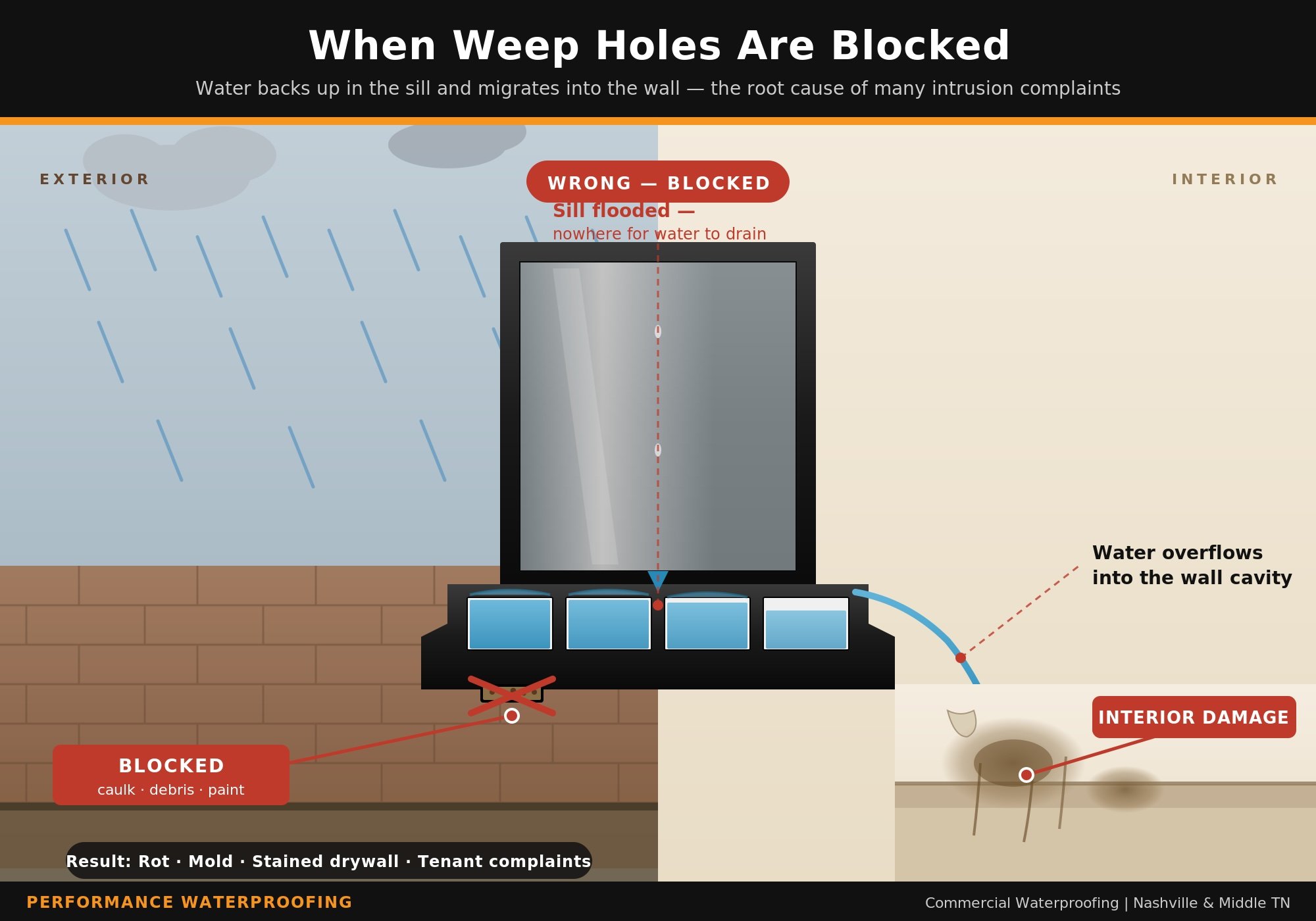
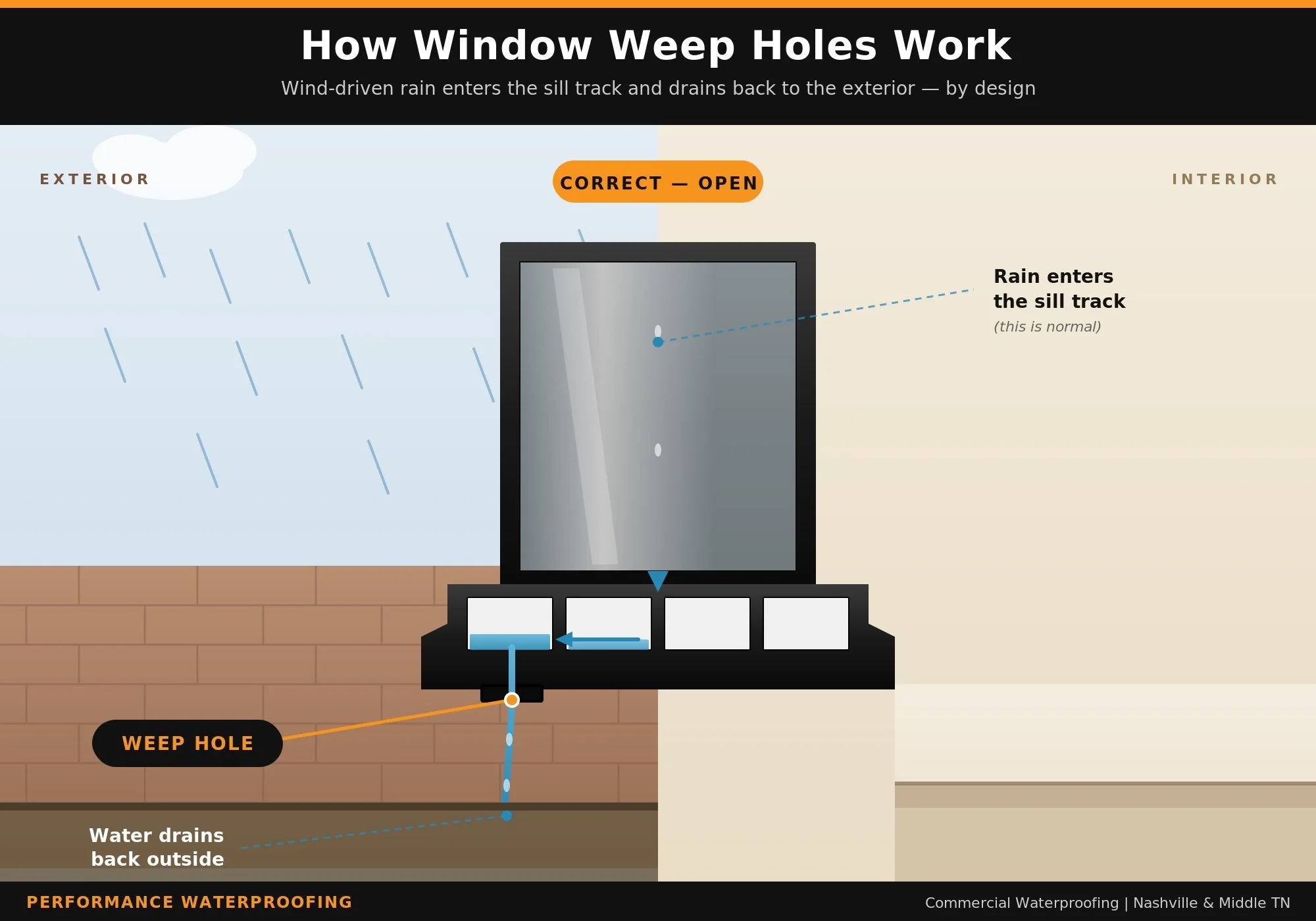
Weep holes are small openings — usually slots or rectangular cutouts — built into the exterior bottom track of a window frame. They are engineered into the window system by design.
Windows are not meant to be 100% watertight. Wind-driven rain, especially the kind we regularly see during Nashville thunderstorms and spring storm cycles, pushes moisture past the outer seals and into the sill track. That's normal. What makes a window system work is that the water has a way out.
That's the weep hole's job. It gives collected water a clear path back to the exterior before it can:
Sit in the sill and rot the framing
Overflow inward and stain interior finishes
Migrate into the wall cavity and feed mold growth
Saturate sheathing and insulation
Undermine sealants and accelerate window failure
In a commercial or multifamily building, that last point matters a lot. One small blocked weep hole becomes a tenant complaint, a work order, a repair bill, and — if it's repeated across a façade — a capital expense.
What Blocks a Weep Hole
On a recent Nashville apartment building project, we documented the two most common failure modes on a single window: fully clogged weep holes and expired window caulk
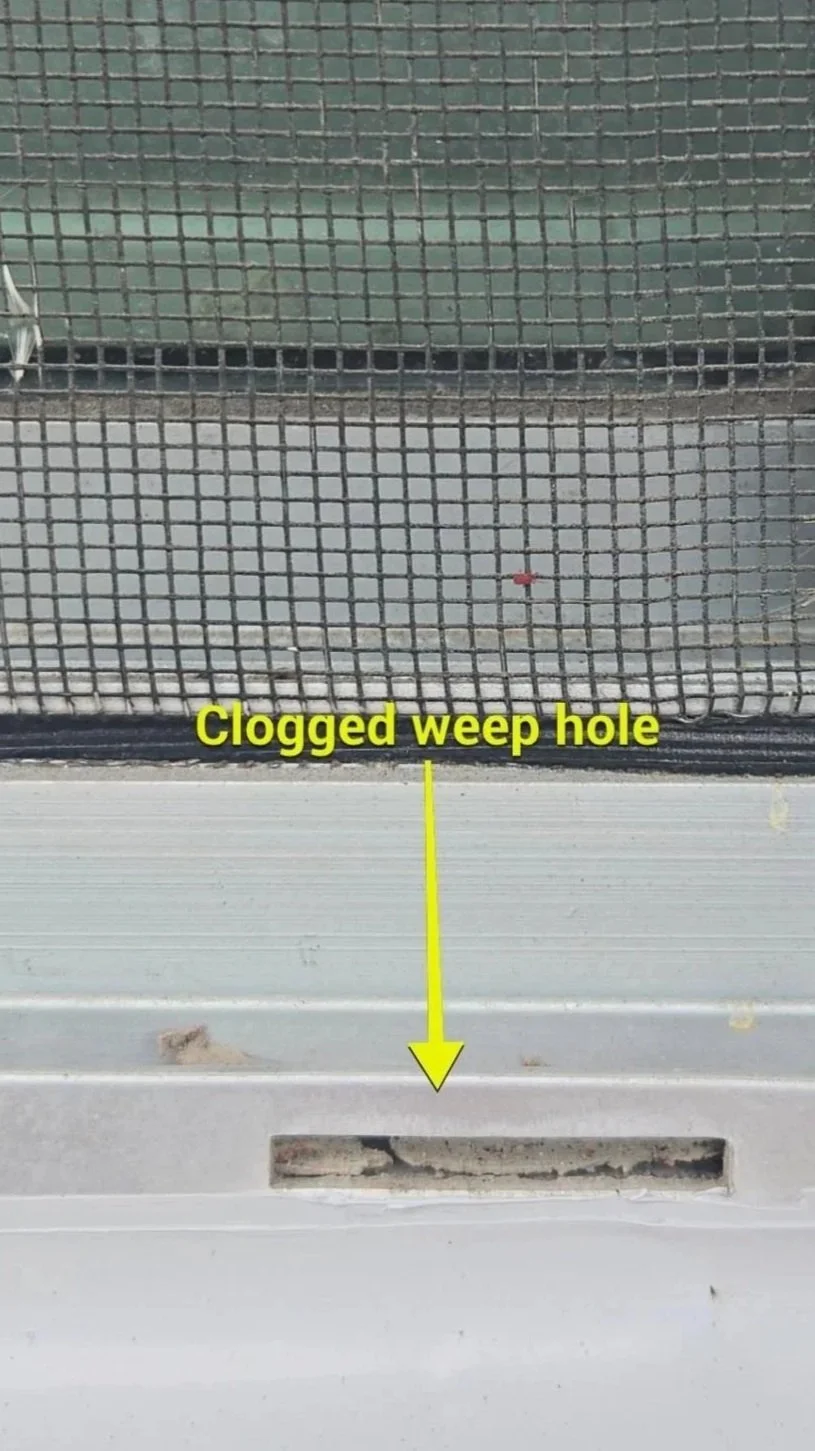
A fully clogged weep hole on a Nashville apartment building. Old sealant residue and airborne debris have packed the opening shut. Water entering the sill has nowhere to drain.
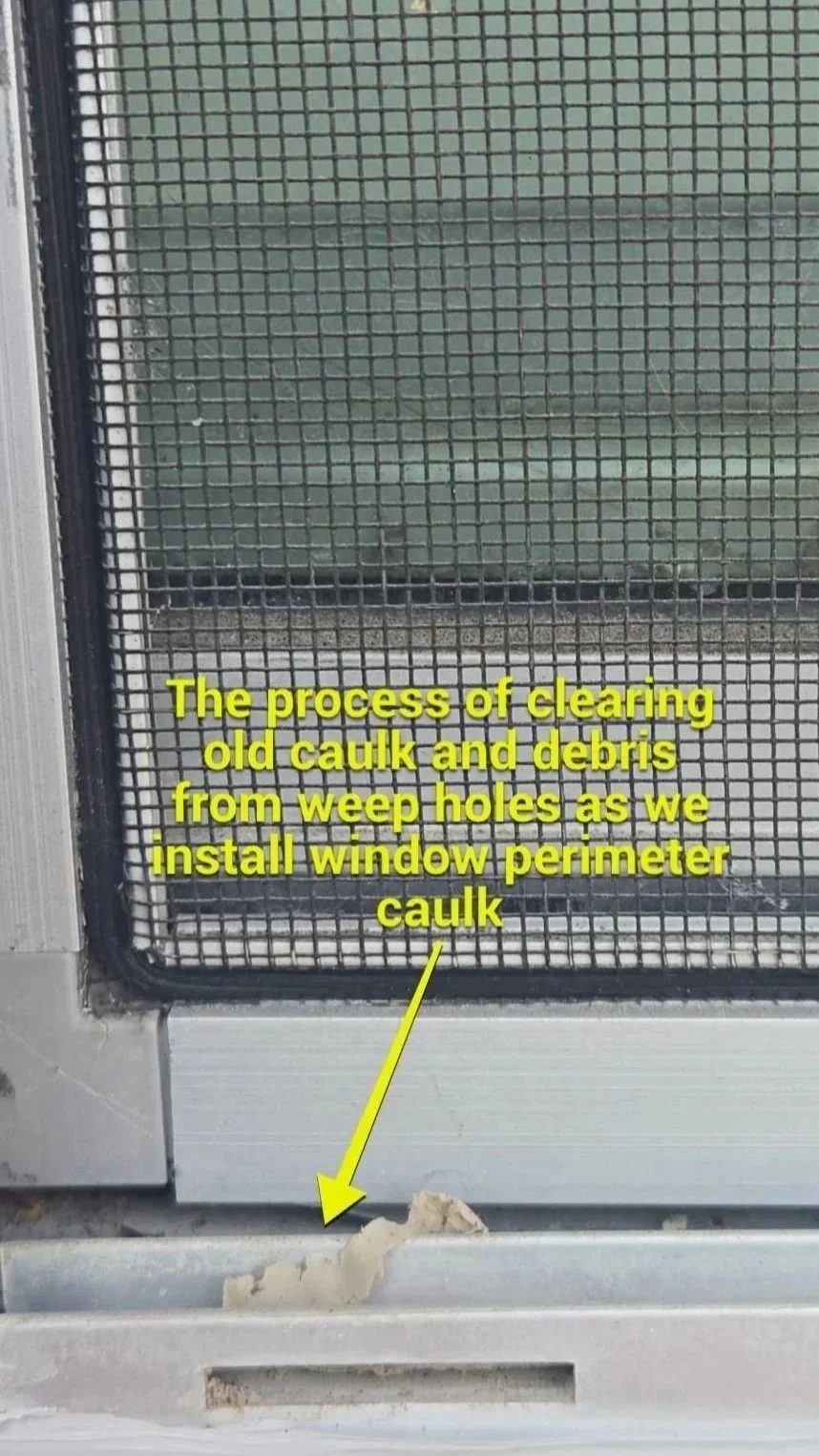
Our crew clearing old caulk and debris from the weep hole during window perimeter caulk installation. The correct approach: seal the perimeter joints, keep the weep holes open.
In the field, we typically see weep holes blocked by:
Old or excess caulk from previous sealant work that bridged into the weep opening
Paint applied during façade repainting with no masking of the window hardware
Dirt, pollen, and organic debris — Middle TN gets plenty of all three
Insect nests and spider webs, especially on lower floors and shaded elevations
Improperly installed flashing tape or trim that covers the drainage path
Every one of these is preventable. None of them should be treated as normal wear.
Sealing the Perimeter Without Sealing the Drain
This is where the work gets nuanced, and where it pays to hire a waterproofing contractor who understands window systems — not just a painter or general handyman with a caulk gun.
When we install window perimeter caulk on a commercial or multifamily building, the goal is to seal the joint between the window frame and the surrounding wall assembly. That joint is where water shouldn't be getting in. New, properly-tooled sealant there is a major defense against water intrusion.
But the weep holes at the bottom of the window sill are a different story. They are supposed to be open. If a crew runs a bead of caulk across the bottom of a window without lifting it around the weep openings — or without clearing old sealant out of them first — they have just converted a working drainage system into a water trap.
On every project, our process includes:
Identifying every weep hole on every window before we start.
Clearing old caulk, paint, and debris from each one with appropriate hand tools and compressed air.
Tooling the new perimeter sealant so it bonds to the frame and wall without bridging or blocking the weep openings.
Verifying drainage before we leave the elevation.
That's what "done right" looks like on a waterproofing scope. It's also the difference between a building that stays dry for years and one that generates recurring leak calls.
What Property Managers and Owners Should Do
If you're responsible for a multifamily or commercial property, here's a simple maintenance posture that will prevent the majority of window-related water-intrusion complaints:
Never allow a trade to caulk, paint over, or cover a weep hole. This includes painters, window washers, pest control, and any sealant contractor who isn't specifically trained on window systems.
Add weep hole inspection to your routine envelope maintenance. A walk-down a couple of times per year — especially after major storms and after pollen season — is usually enough.
Clear debris gently using a thin wire, toothpick, or compressed air. Avoid anything that could scratch or deform the frame.
If you see interior water intrusion and the weep holes are already clear, the problem is upstream — flashing, head sealant, or the window unit itself. That's when it's time to bring in a waterproofing contractor for a targeted inspection.
Protecting Nashville Buildings, One Detail at a Time
Commercial waterproofing isn't about any single product or any single fix. It's about getting the small details right across an entire façade — and understanding which openings in a building are supposed to be sealed and which are supposed to stay open.
Weep holes fall firmly in the second category. Keep them clear, and your window systems will do what they were designed to do.